
Fibre, Fitness, and…Poop? Why Your Gut Matters More Than You Think
Fibre, Fitness, and…Poop? Why Your Gut Matters More Than You Think
 Matraca Villeneuve
 Let’s talk about something every human does—but almost nobody discusses at the gym: poop.
Yes, right alongside squats, protein shakes, and progressive overload, there’s another marker of health quietly happening in the background: your digestive system doing its job.
And one of the biggest players in digestive health is dietary fibre.
If you’re training hard but ignoring fibre, you’re missing a key piece of the performance and health puzzle. So today we’ll talk about why fibre matters—and how a certain famous poop chart can tell you a surprising amount about your diet.
What Is Dietary Fibre (and Why Should You Care)?
Dietary fibre is the indigestible carbohydrate found in plant foods like vegetables, fruit, whole grains, legumes, nuts, and seeds.
Unlike protein, fats, or carbohydrates used for energy, fibre mostly passes through the digestive system intact. But that doesn’t mean it’s useless—far from it.
Fibre plays several critical roles:
1. Digestive Health
Fibre adds bulk to stool and helps move food through the digestive tract.
2. Blood Sugar Control
Soluble fibre slows digestion, helping stabilize blood glucose levels—important for consistent energy during workouts.
3. Heart Health
Higher fibre intake is associated with lower cholesterol levels.
4. Satiety and Body Composition
Fibre-rich foods tend to keep you fuller longer, which can help manage hunger when trying to lose or maintain weight.
According to Health Canada, adults should aim for approximately:
- 25 g/day for women and 38 g/day for men
Most people get far less than this, especially when diets focus heavily on refined carbs or ultra-processed foods.
The Gym Performance Angle
When fibre intake is appropriate, several performance benefits appear:
- More stable energy levels
- Better nutrient absorption
- Healthier gut microbiome
- Improved recovery and immune function
Your gut contains trillions of bacteria that help digest food, produce vitamins, and influence inflammation. Fibre acts as fuel for beneficial gut bacteria, producing compounds that support overall health.
In other words:
Protein builds muscle. Fibre keeps the system running smoothly.
And when the system runs smoothly…well…you know.
The Poop Chart That Doctors Use
Now we arrive at the oddly fascinating part of the discussion.
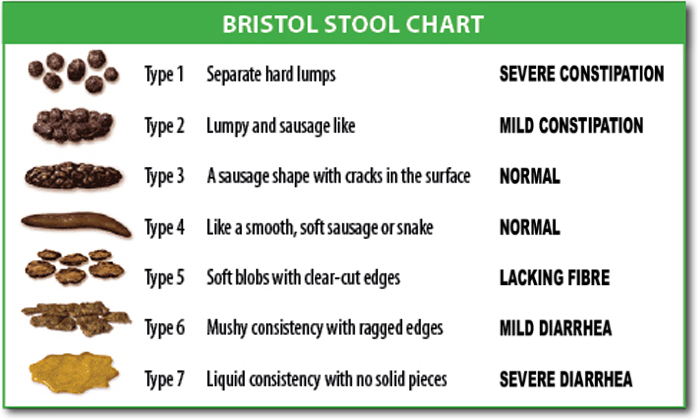
Scientists created a scale called the Bristol Stool Form Scale to classify stool types based on appearance and consistency.
Yes, there is literally a scientific poop chart, and it’s surprisingly useful.
Here’s the simplified version:
The Fibre Connection
Fibre helps regulate stool consistency.
- Too little fibre → hard stools (Types 1–2)
- Balanced fibre intake → ideal stools (Types 3–4)
- Too much too quickly → loose stools (Types 6–7)
The goal is not to obsess over bathroom analytics—but the chart provides a surprisingly simple feedback tool for your diet.
If your digestion is consistently off, your fibre intake may need adjusting.
Easy Ways to Increase Fibre
If you’re currently eating very little fibre, increase intake gradually to avoid digestive discomfort.
Here are simple strategies gym-goers can use:
Add vegetables to every meal
- Spinach in omelettes
- Roasted broccoli with dinner
- Salad with lunch
Upgrade carbs
- Choose oats, quinoa, and brown rice instead of refined grains.
Eat whole fruit
- Apples, berries, and pears are fibre powerhouses.
Include legumes
- Lentils, chickpeas, and beans deliver both fibre and protein.
Snack smarter
- Nuts, seeds, or hummus with veggies.
A Quick Word of Caution
More fibre is not always better immediately.
Jumping from 10 g per day to 40 g overnight may lead to:
- Bloating
- Gas
- Digestive distress
Increase intake slowly and drink plenty of water, since fibre needs fluid to move effectively through the digestive system.
The Bottom Line
Training hard in the gym is only part of the equation. Nutrition supports performance—and fibre plays a bigger role than many people realize.
Adequate fibre intake helps:
- Regulate digestion
- Support gut health
- Stabilize energy
- Improve satiety
- Promote long-term health
And if you ever find yourself wondering whether your diet is on track…
You can always consult the world’s most honest progress tracker…
The toilet.
References
Heaton, K. W., & Lewis, S. J. (1997). Stool form scale as a useful guide to intestinal transit time. Scandinavian Journal of Gastroenterology.
Health Canada. (2022). Dietary fibre and healthy eating.
Slavin, J. (2013). Fiber and prebiotics: mechanisms and health benefits. Nutrients.